Murad Hofmann
Introducing him
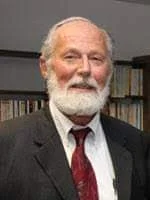
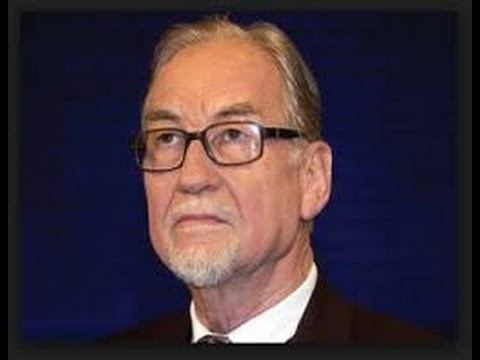
Dr. Murad Wilfried Hofmann, a German national, formerly a Catholic Christian
In his youth, Hofmann was involved in a horrific car accident. After treating him, the surgeon told him, "No one truly survives an accident like this, and God has something very special in store for you, my dear."
Born in 1913, Murad Wilfried Hofmann earned a doctorate in law from Harvard University. He worked as a nuclear defense expert at the German Foreign Office, then as Director of Information at NATO headquarters in Brussels from 1983 to 1987. He served as Germany's ambassador to Algeria from 1987 to 1990, and then as ambassador to Morocco from 1990 to 1994. He is married to a Turkish woman and currently resides in Turkey.
Fate proved the doctor's intuition correct. Dr. Hoffmann embraced Islam in 1980 after a deep study of the religion and experiencing the good character of Muslims in Morocco. His conversion was a subject of discussion due to his high-ranking position in the German government.
His Story of Conversion
Hoffmann said: “In the entrance exam for the German Foreign Office, each applicant had to give a lecture of no more than five minutes on a randomly assigned topic, given to me ten minutes beforehand. I was astonished to learn that my lecture topic was 'The Algerian Question'!
My astonishment stemmed not from ignorance, but from my extensive knowledge of the subject. A few months after the exam, shortly before I was due to leave for Geneva, the head of training informed me, when we met by chance during a meal, that my assignment had been changed to Algeria.” During my time working in Algeria in 1961/1962, I witnessed a period of war that lasted eight years between the French occupation forces and the Algerian National Liberation Front. During my time there, a third party, the Secret Army Organization (OAS), a French terrorist organization comprised of settlers and mutinous soldiers, joined the conflict. Not a day passed without a significant number of people being killed in the streets of Algiers, often shot in the back of the head at close range, simply for being Muslim or for supporting Algerian independence.
These tragic events formed the backdrop for my first close encounter with Islam. I observed the Algerians' remarkable resilience in the face of their suffering, their profound devotion during Ramadan, their unwavering belief in their eventual victory, and their profound humanity amidst their pain. I understood that their faith played a role in all of this, and I witnessed their humanity in its truest form when my wife suffered a miscarriage due to the events unfolding at the time. She started bleeding at midnight, and the ambulance couldn't reach us before 6:00 AM because of the curfew and the prevailing "kill without warning" policy. When 6:00 AM arrived, I realized from my fourth-floor window that the ambulance couldn't find us. After a long delay, we were on our way to the doctor's clinic. My wife thought she was going to faint, so, just in case, she told me her blood type was O Rh-negative. The Algerian driver overheard her and offered to donate some of his blood, which was the same type as hers. Here was a Muslim donating his blood, in the midst of war, to save a foreign woman of a different faith.
To understand how these fascinating indigenous people think and act, I began reading their "book," the Quran, in its French translation. I haven't stopped reading it since. Until then, my only exposure to the Quran was through the open windows of Quranic schools in the M'zab region of southern Algeria, where Berber children memorized and recited it in a language foreign to them—a sight that astonished me greatly. Later, I realized that memorizing and reciting the Quran, as God's direct message, is an obligation under all circumstances.
After 25 years of working in Algeria, I returned as ambassador in 1987.
Since my appointment as ambassador to neighboring Morocco in 1990, the image of Algeria, still suffering tragic pain, is rarely absent from my mind. Could all of this be mere coincidence? Hoffman continues his discussion of the appeal of Islam: “I understand the power of this religion’s art now better than ever, since I am now surrounded at home by abstract art, and therefore by purely Islamic art. I also understand it when the history of Western art remains incapable of even defining Islamic art. Its secret seems to lie in the profound intimacy of Islam in all aspects of this art, such as calligraphy, arabesque, carpet designs, and the architecture of mosques, houses, and cities. I often think about the secrets of mosque lighting, the construction of Islamic palaces, which suggests an inward movement, their gardens evoking paradise with their lush shade, springs, and waterways, and the brilliant socio-functional structure of the old Islamic cities (the medina), which is concerned with communal living, just as it is concerned with highlighting the location of the market, adapting to temperature and wind, and integrating the mosque, the tekke, the madrasa, and the sabil into the market and residential areas. Anyone who knows one of these markets—be it in Damascus, Istanbul, Cairo, Tunis, or Fez—knows them all, for they are all…” Whether large or small, Islamic organizations are of the same functional type.
Hoffmann says: “I was close to Islam in my thoughts before I publicly declared my faith in 1980 by reciting the Shahada in a state of ritual purity, even though I wasn't concerned until then with its obligations and prohibitions in practical life. I was a Muslim intellectually, but not yet practically, and this is certainly something that must now change radically. I shouldn't just be a Muslim in my thinking, but I must also become a Muslim in my behavior.”
Dr. Murad Hoffmann, the former German ambassador, recounts one of the most prominent aspects of his conversion to Islam: his abstention from alcohol and the disappearance of the red wine bottle from his dinner table, guided by the teachings of Islam.
Related Stories